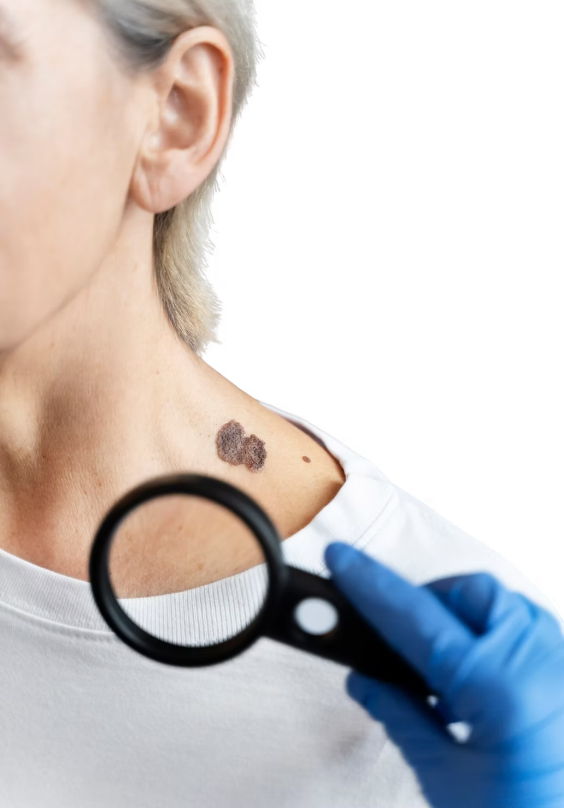
Skin cancer is one of the most common types of cancer in society, especially seen in areas exposed to the sun. It is frequently seen in the face, nose, ear, forehead and neck areas. The most common types of skin cancer are basal cell carcinoma, squamous cell carcinoma, and malignant melanoma. Skin cancers diagnosed at an early stage are often successfully treated surgically.
The basic approach in treatment is to remove the cancerous tissue with sufficient margins. Basal cell carcinomas generally progress slowly and have a low tendency to spread to distant organs. In contrast, squamous cell carcinomas and malignant melanomas can spread to lymph nodes or distant organs. Therefore, in some cases, lymph node biopsy, lymph node dissection, or systemic treatment (immune system boosting or targeted drug treatments) may be required in advanced stages.
Missing tissues after surgery are repaired according to the size and location of the scar. While small areas can be closed by direct stitching, methods such as skin grafts or skin flaps may be preferred for larger tissue losses. These procedures are planned to ensure wound healing and to obtain the best results in terms of aesthetics and functionality.
For detailed information about skin graft and flap surgery, you can take a look at the contents below:
Repair with Skin Graft (Skin Patch)
The type, stage and spread of skin cancer determine the treatment methods to be applied. Therefore, when a suspicious lesion is noticed on the skin, it is of great importance to consult a specialist without wasting time. The diagnosis and treatment process is planned specifically for the patient in cooperation with the plastic surgeon, dermatology and oncology specialists.